February is American Heart Month, an ideal time to check in with your cardiovascular health. Almost half of all Americans have high blood pressure, a condition called hypertension, and one in three are unaware they have it. If left unchecked, hypertension has been linked to serious health risks like heart failure, stroke, and kidney disease.
High blood pressure can be safely managed and reduced to healthier levels over time through a combination of lifestyle and supplemental support. By acknowledging the issue and taking action, noticeable improvement can occur in a matter of weeks, with significant changes in one to three months.
If you have questions about your current blood pressure level, contact or visit your local Community Pharmacy today for a reading and free consultation on where your heart health currently stands.
Understand Key Blood Pressure Metrics
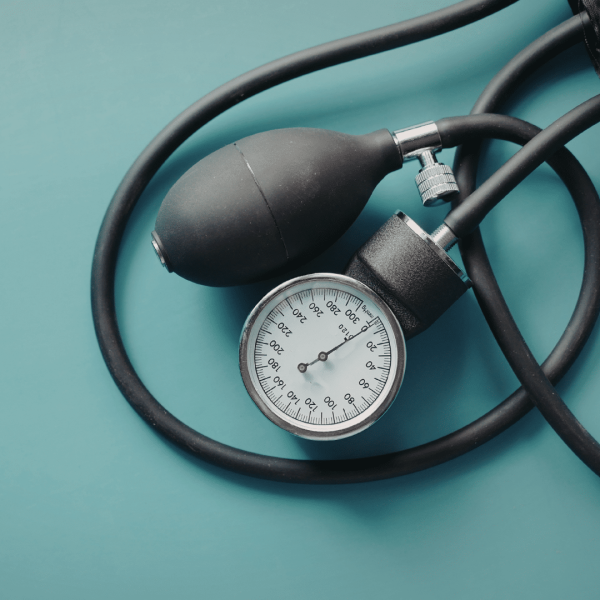
Blood pressure readings measure the amount of force between artery walls and the blood flowing through them as it moves throughout your body. These readings can vary throughout the day and are influenced by stress, diet, exercise, and other factors, so it’s important to take measurements at the same time each day with minimal variables for a clear view.
Blood pressure readings provide two numbers that relate to systolic and diastolic pressure. A typical healthy reading is 120/80. In this reading, 120 is the systolic pressure, and 80 is the diastolic pressure. Here’s the key difference between the two metrics:
- Systolic pressure
- Measures the pressure when your heart contracts
- In people over the age of 50, systolic pressure is a more important indicator of cardiovascular risk. This is because as we age, the arteries in our hearts become less elastic, causing higher pressure when our hearts contract to pump blood
- Diastolic pressure
- Measures the pressure when your heart relaxes
- Measures the pressure when your heart relaxes
Both systolic and diastolic pressure can be used to diagnose hypertension and are sensitive to stressors, caffeine, anxiety, and pain. As a result, your doctor will measure your blood pressure multiple times while you are relaxed to get consistent readings.
A consistent systolic reading over 130 is considered Stage 1 Hypertension, over 140 is Stage 2, and 180 indicates a Hypertensive Crisis. For diastolic pressure, readings over 80 are Stage 1, over 90 are Stage 2, and 120 is the threshold for Hypertensive Crisis.
When blood pressure is high, the heart must work harder to pump blood throughout the body. Over time, this can damage arteries and increase the risk of serious health conditions.
Implement Cardio Friendly Supplement and Lifestyle Adjustments
Whether you have high blood pressure or are taking preventive measures, there are several proven pathways to bringing readings back down to healthy levels. Options include:
- Consider a DASH (Dietary Approaches to Stop Hypertension)
- High in fruits, vegetables, fiber, and low-fat dairy products, and low in saturated fats, trans fats, and sugars.
- Limit sodium intake,
- Ideally, 1,500 mg per day or less. Fewer processed foods, less table salt, and cooking at home are easy ways to implement this.
- Exercise regularly
- Aerobic forms like running, cycling, or swimming for at least 30 minutes per day 5 days a week, or 150 minutes total per week.
- Strength training or high-intensity interval training is also proven to be helpful.
- Even small weight loss often lowers blood pressure as the loss of 1 kg equals a decrease in BP by ~1 mmHg.
- Aim for sleep consistency.
- Between 7 and 9 hours of sleep for most adults.
- Maintain a consistent bed and wake time, as irregular sleep patterns can contribute to hypertension.
- Set alcohol consumption limits
- Men are recommended to have a maximum of 2 drinks per day and 1 drink per day for women.
- Add heart-healthy supplements.
- Potassium
- Can counterbalance sodium.
- Naturally found in bananas, beans, and potatoes, but can be taken as a supplement.
- Recommended intake of 3,000 mg per day.
- Primarily from food, most supplements offer 100 mg per serving, as excessive potassium consumption can be dangerous.
- Please ask your doctor before increasing potassium intake if you have chronic kidney disease.
- Omega-3s (fish oil)
- Helps reduce systolic heart pressure and is good for overall health.
- Commonly found in fish, it can be taken as an individual supplement.
- The American Heart Association recommends an intake of 3,000 mg per day.
- Fish oil can prolong bleeding time. Please ask your doctor before use if you think you might be at higher risk of bleeding (e.g. taking warfarin, undergoing surgery, etc.)
- Magnesium
- Can relax blood vessels and calms the nervous system.
- Recommended dose of 200-400 mg per day.
- Please ask your doctor before use if you have kidney disease.
- Potassium
By becoming aware of your cardiovascular health through consistent blood pressure readings and implementing a few lifestyle changes, a real positive impact can be made.
Heart health is never something to delay; once you have the right information and a plan in place, improvement will follow. If you have questions about how to manage high blood pressure for yourself or a loved one, don’t hesitate to reach out today.